How Small Healthcare Employers Can Improve Candidate Experience From Application to Offer Using Data
Naresh Gowda
Co-Founder & CTO · RiseYou
Discover how small healthcare employers can leverage data-driven strategies to enhance candidate experience, reduce time-to-hire, and attract top talent in a competitive market.
Key takeaways
- Leverage data to understand and meet candidate expectations at each stage of the hiring process.
- Use AI screening to ensure a fair and efficient evaluation process for candidates with no prior experience.
- Implement flexible work conditions to boost candidate satisfaction and acceptance rates.
- Streamline recruitment in high-growth areas like healthcare to attract and retain top talent.
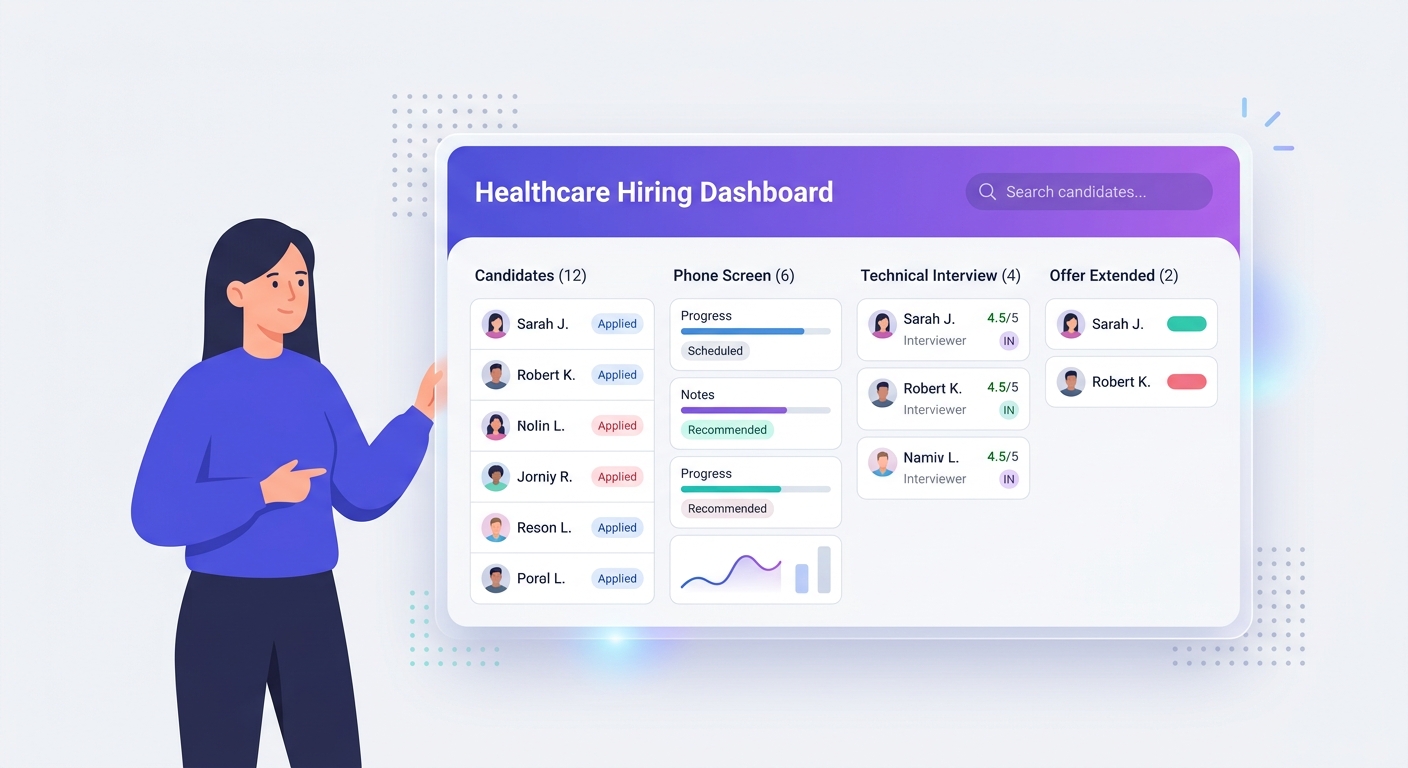
- Adopt a unified dashboard to improve communication and reduce the chances of candidates feeling ghosted.
Picture a small healthcare employer trying to fill a critical nursing role. With job openings at an all-time high and candidates often feeling lost in the process, how can you make sure they feel valued from the first click to the final offer? Today’s candidates expect transparency, speed, and respect — and the data gives us a clear roadmap to deliver just that.
The Changing Landscape of Healthcare Hiring
The job market has shifted dramatically. In 2026, there were 6.9 million job openings, with healthcare leading the pack in projected growth. For small healthcare employers, this means standing out isn’t just nice-to-have — it’s survival. Candidates today, especially those without prior work experience (which accounted for 90% of workers in 26 occupations in 2025), need clear guidance and support.
job openings in January 2026
Source: Bureau of Labor Statistics, 2026
Why Candidates Feel Lost — And How to Guide Them
Many job seekers get ghosted after an interview or lose interest because the process drags on indefinitely. For small healthcare employers, this is a missed opportunity. The average job required 1,021 days of prior work experience in 2022, but that doesn’t mean your candidates should feel unprepared or unsupported. By setting realistic expectations and offering tailored support — like clear onboarding timelines (the average on-the-job training required was just 31.75 hours in 2022) — you build trust and reduce drop-off.
days of prior work experience required for the average job in 2022
Source: Bureau of Labor Statistics, 2022
RiseYou: The Bridge Between Small Healthcare Employers and Candidates
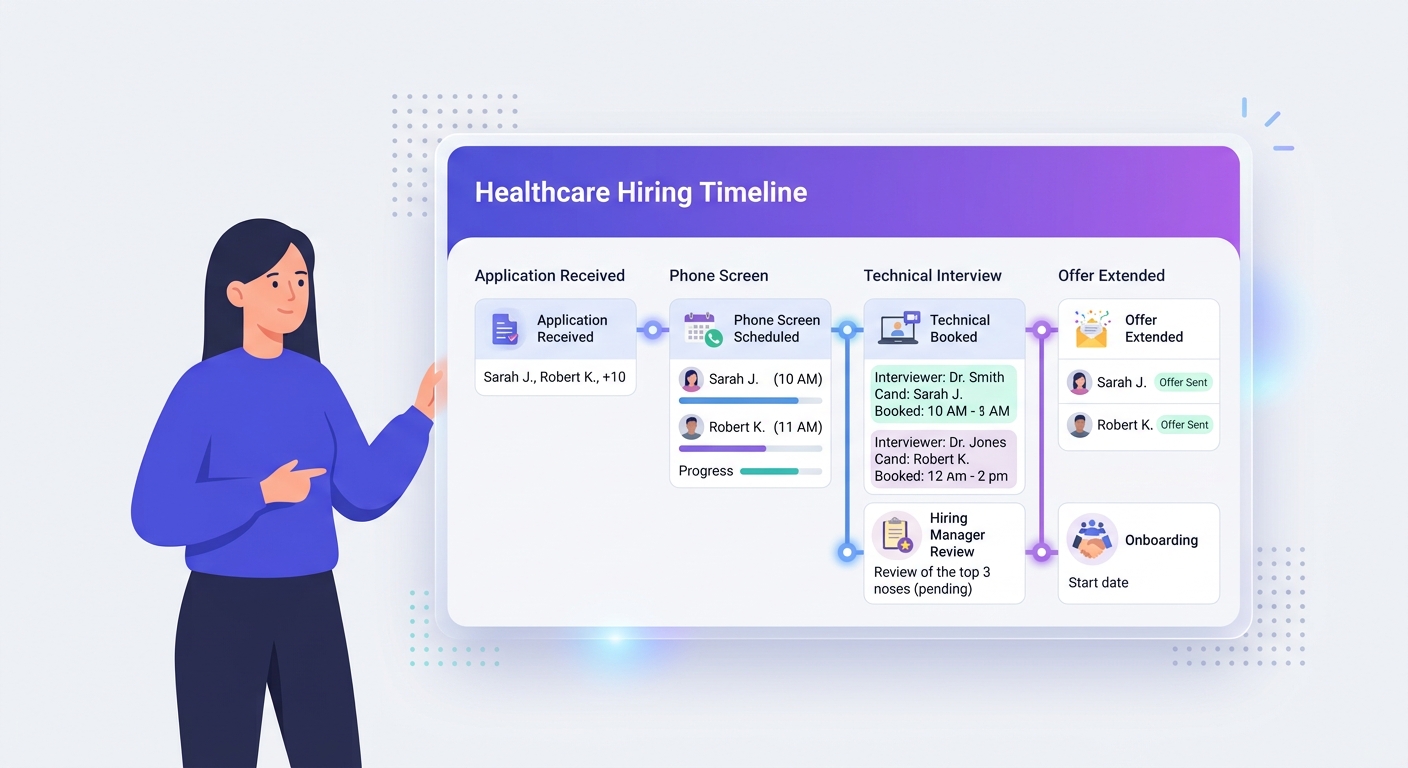
This is where RiseYou steps in. Our AI Screening interview ensures every candidate, regardless of experience level, gets a fair evaluation based on real competencies — not just keywords. Combined with a voice-integrity check, you can be confident you’re speaking to the right person. Candidates choose their experience stage — Entry-level, Specialist, Manager — fitting their actual abilities, not padded resumes. And with a unified dashboard, HR teams can keep candidates in the loop at every step, eliminating the dreaded ghosting effect.
What Will You Do to Improve Your Candidate Experience?
Are you looking to reduce time-to-hire, ensure fair evaluation for entry-level candidates, or simply give candidates the respect they deserve? With the right data and the right tools, small healthcare employers can transform their hiring process from a source of frustration to a competitive advantage.