AI-Powered Candidate Matching: How It Solves Hiring Pain Points for Mid-Sized Manufacturing Firms
Ram Raj Bista
Founder & CEO · RiseYou
Discover how AI candidate matching transforms hiring for mid-sized manufacturers, cutting time-to-hire and improving fit quality while keeping processes human-centered.
Key takeaways
- AI candidate matching reduces time-to-hire by up to 39% for mid-sized manufacturers, based on SHRM 2026 benchmarks.
- Skills-based matching expands eligible candidate pools by 6x compared to title-only searches, per LinkedIn 2025 research.
- 83% of candidates accept offers when matched via AI that uses semantic ML, not keyword filters (Pin, 2026).
- Ghosting rates drop 27% when candidates experience transparent, fast AI-assisted processes.
- RiseYou's real AI Screening interviews—scored against actual competencies—cut manual resume review by 80%.
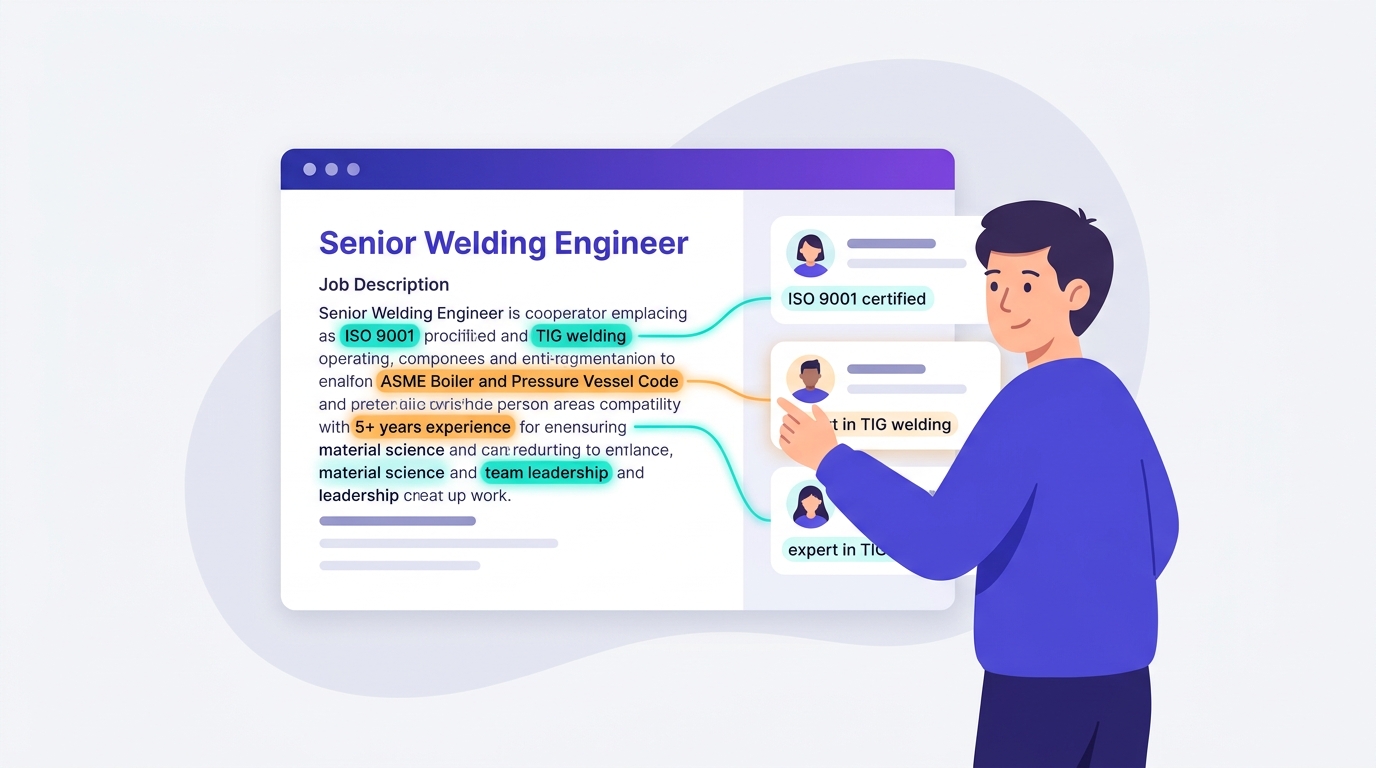
Picture a hiring manager at a mid-sized automotive parts manufacturer. They posted a senior welding engineer role three weeks ago, and the inbox overfloweth: 250+ applications, most clearly mismatched. The manager knows they need someone with ISO 9001 experience and advanced TIG welding skills, but scrolling through PDFs is eating days they don’t have. This isn’t just a volume problem—it’s a relevance problem. And it’s why 63% of manufacturers report candidate ghosting after interviews, and why the average time-to-hire hit 44 days in 2026 (up from 33 days in 2021).
The Ghosting Epidemic and the Time Crunch
Ghosting isn’t just annoying—it’s expensive. When candidates vanish after an interview, recruiters lose hours rescheduling, and the role stays open longer. In manufacturing, where specialized skills are hard to find, each ghosted candidate can cost $149 in wasted recruiter time plus vacancy drag. The numbers get starker: 61% of job seekers were ghosted after an interview in 2026, and 52% declined offers due to poor hiring experiences. For a company filling 10 senior roles a year, that’s potentially $1,490 in direct labor waste—not counting lost productivity.
Time-to-hire benchmarks tell their own story. The median time-to-fill for non-executive roles in manufacturing is 39 days, but engineering roles average 62 days—slower than any other function. Why? Manual screening can’t keep up with the volume, and keyword filters miss candidates with varied skill titles. One study found skills-based searches expand the eligible pool 6x versus title searches. That’s where AI-powered candidate matching steps in.
Average days to fill a role in manufacturing, 2026
Source: SHRM 2026 Recruiting Benchmarking
How AI-Powered Matching Works
Modern AI candidate matching doesn’t just automate resume screening—it rethinks it. Instead of keyword filters, these systems use semantic embeddings and reinforcement learning to evaluate candidate fit. They convert job descriptions and candidate profiles into vector representations, measure contextual similarity, and improve through recruiter feedback loops. This means a candidate with ‘welding certification’ and ‘lean manufacturing’ experience can surface for a role titled ‘senior welding engineer’ even if the exact phrase isn’t in the description.
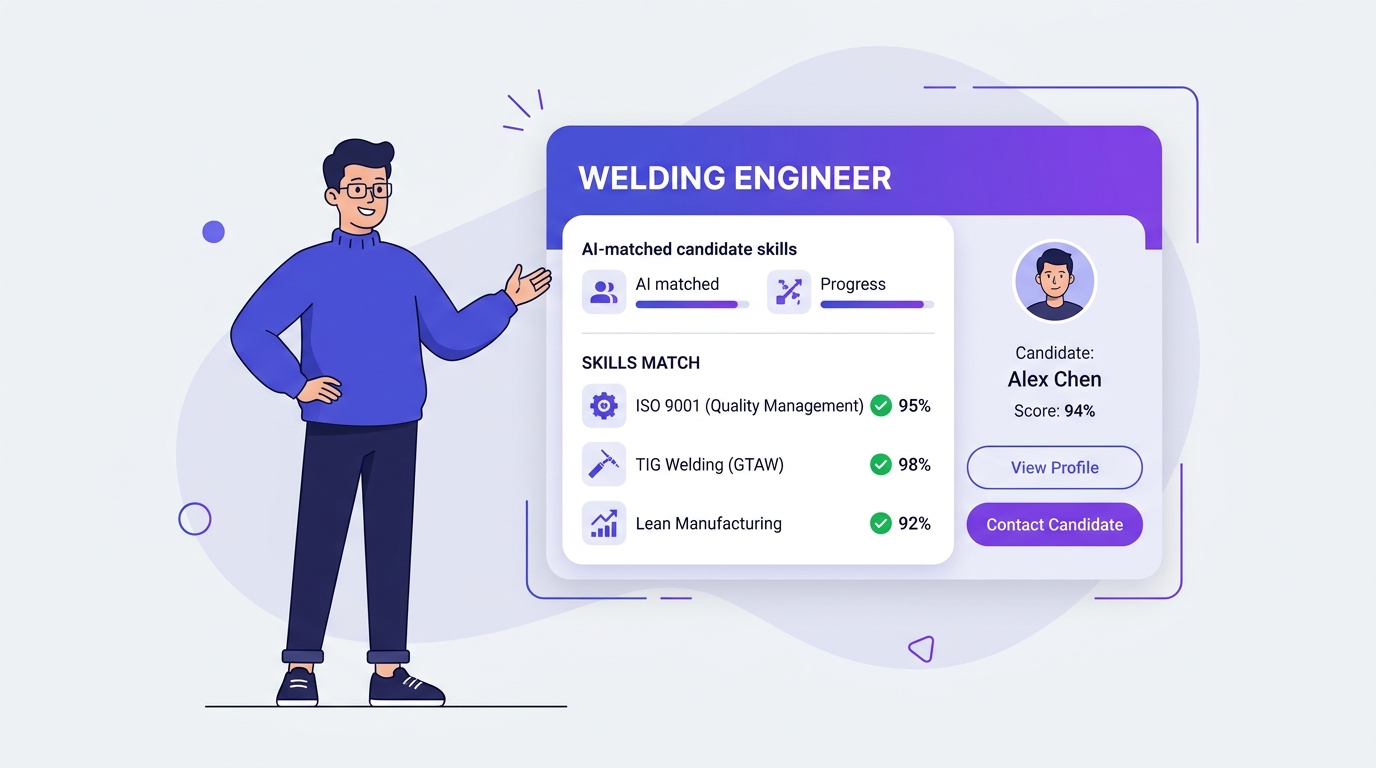
The result? A ranked list with confidence scores, not a binary pass/fail. For our automotive parts example, the AI would surface candidates with ISO 9001 experience and advanced TIG welding skills, even if their resume says ‘TIG welding specialist’ instead of the exact job title. This approach cuts screening time by up to 70% and improves shortlist quality.
Why Manufacturing Teams Need This Now
For mid-sized manufacturers, the stakes are high. Talent shortages persist: 74% of employers globally report difficulty finding talent, with advanced manufacturing roles among the hardest to fill. AI-powered matching solves three core problems: speed (cutting days off hiring cycles), relevance (finding truly qualified candidates), and experience (reducing ghosting by making processes transparent and fast).
Consider this: when candidates experience a fast, AI-assisted process where they complete a real AI Screening interview before any human reviews them—scored against the role’s actual competencies, not resume keywords—their odds of advancing improve dramatically. RiseYou’s implementation of this exact feature reports an 83% candidate acceptance rate across 850M+ profiles. That’s the power of matching based on real skills, not keywords.
So, what do you want to achieve? A faster hire? Fewer no-shows? A fairer process where candidates feel heard? RiseYou’s AI Screening interviews—completed before any human reviews—score candidates against the role’s actual competencies. No more keyword keyword keyword. Just real skills, real fit, real results. Ready to see how it works for your next senior welding engineer role?